
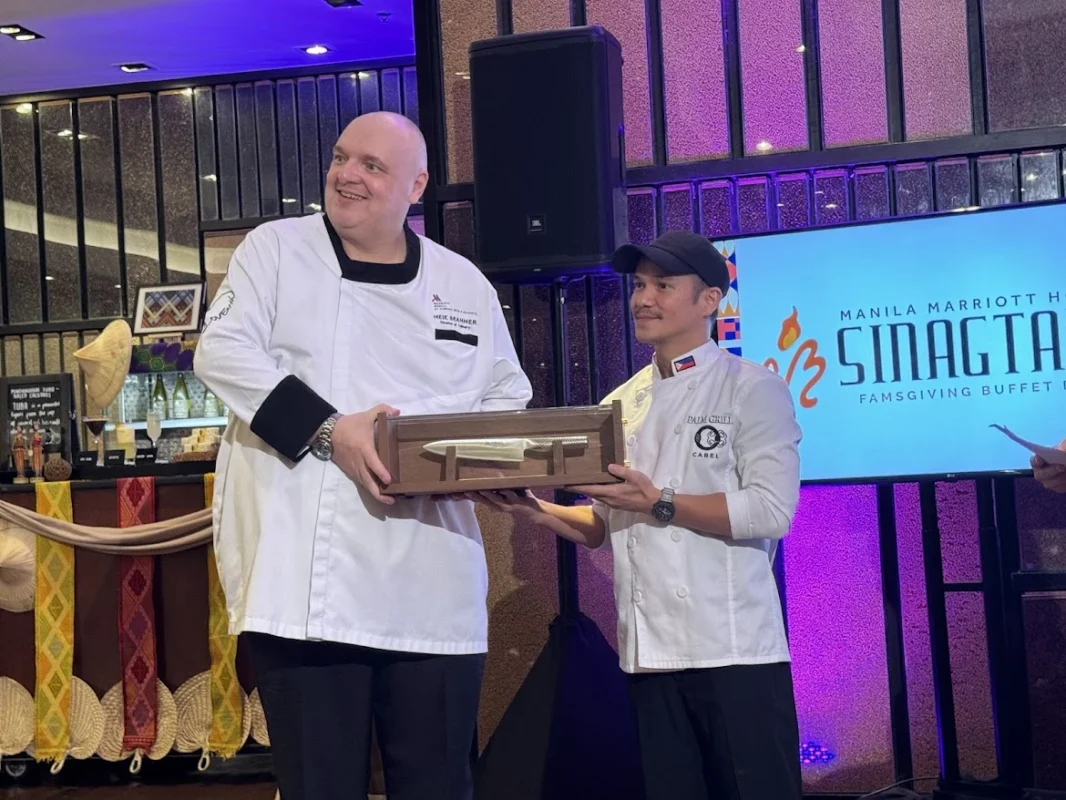
Filipino Michelin Bib Gourmand chef Miguel Cabel Moreno’s mission to promote a unique facet of Philippine gastronomy not too long ago took on a brand new kind along with his current collaboration with Manila Marriott Hotel at Newport World Resorts.
The Tausug chef is now a part of the resort’s Marriott International Sinagtala Philippine Culinary Arts Programme (Sinagtala) by a current kitchen takeover which is able to take centre stage on the Marriott Cafe all through April 2026, coinciding with Filipino Food Month.
For Cabel Moreno, it’s tangible proof that his efforts to promote a cuisine which has primarily flown below the radar of worldwide vacationers at the moment are bearing fruit and the world is lastly taking discover.
As he declared in the course of the launch of the Sinagtala Famsgiving providing at Marriott Manila on Thursday, nineteenth March: “Our biggest struggle for the better part of eight years was about being heard and being discovered by fellow Filipinos in search of new flavours to try. While Michelin gave us the validation that we’ve always been gunning for, it wasn’t easy; it was hard work, it was clear love and passion. My goal from the get-go was to introduce the best of Southern Mindanao and to tell the rest of the Philippines and the world that we are very proud of our original endemic cuisine.”
These sentiments echo Cabel Moreno’s previous interview with Travel Daily Media whereby he expressed gratitude for an additional alternative by which to share the wealthy gastronomic heritage of the southern provinces of Zamboanga, Basilan, Sulu, and Tawi-Tawi (ZamBaSulTa), a area usually ignored by gastronomes in favour of the customarily Spanish- or Chinese-derived cuisines of the northern and central Philippines.
At the time, he stated: “I hope that, when diners step out, they will have a more positive and better view of Mindanao as a whole. Hopefully, they’ll want to try and visit Mindanao themselves.”

Shifting perceptions in Philippine gastronomy
For Sharlene Zabala-Batin, assistant secretary for tourism digitalisation and useful resource technology on the Philippine Department of Tourism (DOT), collaborations between cooks and gastronomic heritage advocates like Cabel Moreno and main motels displays simply how strongly gastronomic tourism helps the general vacationer expertise within the nation.
Speaking on the Sinagtala occasion, Zabala-Batin declared: “We want to highlight how food serves as a gateway to understanding our own culture and history, as well as our Asian identity. We want to connect people through food, history, tradition, and communities. By featuring the distinctive flavors of ZamBaSulTa, we honour the cultural heritage of Filipino Muslim communities as each dish carries with it a story: a story of place, a story of people, and a story of tradition.”
This mindset is a robust backlash, so to converse, towards the most common perceptions regarding Filipino cuisine, particularly abroad as the current vogue for Filipino dishes is on the rise.
It doesn’t bode nicely for Philippine gastronomy if all individuals learn about it are the same old menus revolving round sinigang, adobo, lumpia, and halo-halo, or if the main target retains centring on Kapampangan (northern) and Cebuano / Ilonggo (central) cuisine.
As Cabel Moreno put it in March of final 12 months: “Food tells a story; but, for too long, Mindanao’s story has been overlooked or, worse, misrepresented. As a chef, I’m pushing to change that by putting Tausug cuisine in the spotlight. Dishes like tiyula itum and piyanggang manok aren’t just food; they’re history, identity, and proof of Mindanao’s rich heritage.”
Zabala-Batin likewise added: “For us [at the DOT], gastronomic tourism also plays a major role in supporting the national economy. It provides opportunities for our local producers, strengthens the regional value chain, and creates meaningful livelihoods. It also affirms the importance of preserving and celebrating our diverse cultural heritage.”

Safeguarding traditions and sharing them with the world
Programmes like Marriott’s Sinagtala had been created to showcase the culinary traditions and improvements native to particular areas, sharing them with their international community, thus fostering a higher understanding of different nations and driving tourism.
At the identical time, these programmes additionally serve to practice a brand new technology of culinary professionals who will, of their flip, be the guardians of culinary heritage.
In which case, it helps to begin them younger, providing energetic publicity to the entire gamut of dishes, preparation methods, and even serving etiquette endemic to a selected area.
Meanwhile, initiatives just like the annual Filipino Food Month which runs for the whole lot of April give motels and eating places the chance to showcase native specialities, enabling them to each educate visitors’ palates and fulfill their cravings.
But, once more, that is however the tip of the iceberg: for Cabel Moreno and his fellow gastronomic heritage advocates, that is simply one other step in direction of exhibiting the world that there’s extra to Philippine cuisine than the dishes proven on influencers’ socials, and that intrepid travellers want to come over and pattern it for themselves.
Photos and reportage: Marga Manlapig
